A 57-year-old south side man, who might have been struggling with a hangover, is charged today with shooting his lawn mower with a sawed-off shotgun.That beast'll never belch carbon again. Sure, it's only one lawn mower, but if each of us would commit to shooting our own lawn mowers, we might just end up saving the planet.
"I'll tell you the truth," a criminal complaint quotes an apparently inebriated Keith Walendowski. "I got pissed because my lawn mower wouldn't start, so I got my shotgun and shot it.
"I can do that. It's my lawn mower and my yard, so I can shoot it if I want," Walendowski told police.
Friday, July 25, 2008
Sure, he may go to jail, but he may also have earned a carbon credit or two
Milwaukee Journal-Sentinel, July 25:


Monday, July 21, 2008
The War on Global Warming is the health of the state
Small-"l" libertarians are known for their opposition to policies that expand the power* of the state at the expense of individual liberty. That makes it all the more fascinating that the big-"L" Libertarian Party has nominated a man who has endorsed a plan that -- if implemented -- would amount to one of the biggest-ever expansions of government power*.
As CNSNews reports:
So what do you think, LP members?
Of course, the candidate I'm most likely to vote for, although he represents the party that had a better-than-even chance of articulating a sane point of view on the AGW issue, has also completely embraced Gore's presuppositions (if not all of Gore's policy prescriptions). Sigh.
* (Given the subject matter of Gore's speech, I apologize for the repeated but unavoidable pun)
As CNSNews reports:
Libertarian presidential candidate Bob Barr praised Al Gore, who challenged the United States Thursday to run on 100 percent zero-carbon electricity within 10 years.As any true libertarian will testify (I don't consider myself to be one, but I lean in that direction), the government almost never surrenders power* that is usurped in times of crisis.
Barr, a former Republican congressman from Georgia who attended the former vice president’s Washington, D.C., speech Thursday, said Gore’s plan “makes sense.”
“America responds well to challenges, if it is laid out, if it’s in terms that people can understand and relate to, if it makes sense – and what he’s laid out makes sense,” Barr said in an interview with Cybercast News Service after Gore spoke.
In a speech at the Daughters of the American Revolution’s Constitution Hall, Gore said the United States should move towards producing all of its electricity from renewable energy and clean carbon-free sources, a strategy Gore said would “re-power America."
[...]
Barr, who attended Thursday’s speech, said he was “deeply” indebted to Gore for “laying the challenge out there.”
So what do you think, LP members?
Of course, the candidate I'm most likely to vote for, although he represents the party that had a better-than-even chance of articulating a sane point of view on the AGW issue, has also completely embraced Gore's presuppositions (if not all of Gore's policy prescriptions). Sigh.
* (Given the subject matter of Gore's speech, I apologize for the repeated but unavoidable pun)
Gore's plan to bankrupt America
In a remarkable feat of understatement, The New York Times entitled its account of Al Gore's July 17 speech: Gore Urges Change to Dodge an Energy Crisis.
The word "change" has been bandied about so much in the current presidential campaign that people don't expect any specifics to be attached to the word. But Gore cannot be accused of empty rhetoric in this case. He believes that trillions of dollars should be shifted away from keeping our country's economic engine running and toward a complete replacement of our country's energy infrastructure. In ten years.
Gore was in fine TEOTWAWKI form in his Washington speech, as the NYT reports:
Obama and McCain, while they may not have endorsed Gore's plan yet, seem all too happy to go the first step, which appears in the form of the EPA's Proposed Plan To Control Every Aspect Of Your Life. The Bush administration won't let that monstrosity move forward for now, but January 2009 is not far away.
The word "change" has been bandied about so much in the current presidential campaign that people don't expect any specifics to be attached to the word. But Gore cannot be accused of empty rhetoric in this case. He believes that trillions of dollars should be shifted away from keeping our country's economic engine running and toward a complete replacement of our country's energy infrastructure. In ten years.
Gore was in fine TEOTWAWKI form in his Washington speech, as the NYT reports:
Former Vice President Al Gore on Thursday urged the United States to wean the nation from its entire electricity grid to carbon-free energy within 10 years, warning that drastic steps were needed to avoid a global economic and ecological cataclysm.As this excerpt shows, no cost is too great for you and me to bear, because the future of human civilization is at stake.
Like a modern Jeremiah, Mr. Gore called down thunder to justify the spending of trillions of dollars to remake the American power system, a plan fraught with technological and political challenges that goes far beyond the changes recently debated in Congress and by world leaders.
“The survival of the United States of America as we know it is at risk,” he said in a midday speech to a friendly crowd of mostly young supporters in Washington. “And even more — if more should be required — the future of human civilization is at stake.”
“To those who say 10 years is not enough time, I respectfully ask them to consider seriously what the world’s scientists are telling us about the risks we face if we don’t act in less than 10 years,” he said.No, no, no... don't evaluate -- there's no time! The time for thinking is over -- it's time to act! So the complete reengineering of our power infrastructure would completely bankrupt our economy, likely taking the rest of the world with it -- what's your point?
Obama and McCain, while they may not have endorsed Gore's plan yet, seem all too happy to go the first step, which appears in the form of the EPA's Proposed Plan To Control Every Aspect Of Your Life. The Bush administration won't let that monstrosity move forward for now, but January 2009 is not far away.
Friday, July 11, 2008
US dodges economy-crushing bullet: EPA declines to regulate CO2 (for now)
Environmentalists rejoiced when scientists* sitting on the US Supreme Court ruled that the government had every right to regulate CO2 -- a gas essential for life on earth -- as a pollutant. Although it would seem a bit of a challenge to distinguish anthropogenic CO2 molecules from naturally-occurring ones (perhaps we could tag ours), or to prevent foreign-generated CO2 from mixing with domestic CO2, it appeared certain that the Environmental Protection Agency (EPA), under mounting pressure from the greens, was ready to assert jurisdiction over nearly every aspect of human activity in America.
Stunningly, the Bush administration's EPA declined an opportunity that would in effect have given the environmentalists everything they wanted.
* (Tim wrote with a straight face)
Stunningly, the Bush administration's EPA declined an opportunity that would in effect have given the environmentalists everything they wanted.
So, we've dodged a bullet, at least until the next administration takes office. It seems that John McCain, although he has embraced much of the propaganda, is far less inclined than Barack Obama is to use a heavy-handed, bureaucratic end-run technique like this to advance the AGW agenda.In its voluminous document [588 pages!], the EPA laid out a buffet of options on how to reduce greenhouse gases from cars, ships, trains, power plants, factories and refineries.
"One point is clear: The potential regulation of greenhouse gases under any portion of the Clean Air Act could result in unprecedented expansion of EPA authority that would have a profound effect on virtually every sector of the economy and touch every household in the land," the EPA's Johnson said in a preface to the federal notice.
EPA said that it encountered resistance from the Agriculture, Commerce, Energy and Transportation departments, as well as the White House, that made it "impossible" to respond in a timely fashion to the Supreme Court decision.
"Our agencies have serious concerns with this suggestion because it does not fairly recognize the enormous — and, we believe, insurmountable — burdens, difficulties, and costs, and likely limited benefits, of using the Clean Air Act" to regulate greenhouse gas emissions, the secretaries of the four agencies wrote to the White House on July 9.
* (Tim wrote with a straight face)
Tuesday, June 24, 2008
Funny numbers in TCPR 'Gore mansion' press release
The Tennessee Center for Policy Research made a splash last week with their press release claiming that energy usage in Al Gore's Nashville-area compound had actually increased ten percent since 'green' renovations had been completed. TCPR was made news last year when they first brought Gore's conspicuous consumption to light. Although Team Gore denies any connection between TCPR's 2007 report and the subsequent renovations, the timing is, as they say, suspicious.
Your humble Heretic, of course, couldn't pass up an opportunity to highlight the latest release, joining countless others in the blogosphere. I guess it is basic human nature that we are not as rigorous about fact-checking data that support our point of view. It is also basic human nature that we try hard to find holes in data that appear to disagree with our point of view. Sometimes such opposition research can yield results that further the cause of integrity in the AGW debate.
Blogger Tim Lambert is no friend of the skeptic community, which no doubt made it easy for him to notice discrepancies between TCPR's 2007 release and last week's release. At the risk of causing my readers to lapse into an eye-glazed stupor, let's look at the claims made in the two reports:
Looking only at this month's release, however, the numbers do work out: the monthly consumption increased from 16,130kwh to 17,768kwh, which is indeed a 10% increase. This raises problems with last year's press release, though. That report gave Gore's 2006 annual consumption as 221,000kwh, but 16,130 x 12 is actually 193,560kwh.
Sorry for the blizzard of calculations; let me get to my point. The biggest discrepancy appears to be an incorrect annual total in the 2007 press release. To my knowledge, TCPR has never corrected or clarified this number, and as of this moment TCPR has not yet responded to my request for a clarification.
As long as TCPR allows this discrepancy to stand, its credibility in the AGW debate will be open to legitimate question. I'm hoping that integrity will win out over the simple desire to score political points over Al Gore.
Your humble Heretic, of course, couldn't pass up an opportunity to highlight the latest release, joining countless others in the blogosphere. I guess it is basic human nature that we are not as rigorous about fact-checking data that support our point of view. It is also basic human nature that we try hard to find holes in data that appear to disagree with our point of view. Sometimes such opposition research can yield results that further the cause of integrity in the AGW debate.
Blogger Tim Lambert is no friend of the skeptic community, which no doubt made it easy for him to notice discrepancies between TCPR's 2007 release and last week's release. At the risk of causing my readers to lapse into an eye-glazed stupor, let's look at the claims made in the two reports:
February 2007 press release
- Gore's 2006 energy consumption: 221,000kwh/year [i.e. 18,417kwh/month]
- Average American household consumption: 10,656kwh/year [i.e. 888kwh/month]
- Gore's consumption 20 times the average American household
June 2008 press release
The 2008 report's numbers are internally consistent, but they do not mesh with what was claimed in the 2007 report. Comparing the annual numbers, Lambert noted that a 2006 total of 221,000kwh and a 2007 total of 213,210kwh yields a 4% decrease, not a 10% increase. On the basis of this observation, Lambert declared TCPR to be an unreliable source and summarily dismissed the larger point raised in the newest press release (namely, that Gore consumes energy like a drunken sailor).
- Gore's 2007 energy consumption: 213,210kwh/year [i.e. 17,768kwh/month]
- 2006 monthly consumption: 16,130kwh
- 2007 consumption 10% increase over 2006
- 2007 consumption would power 232 normal homes for a month
Looking only at this month's release, however, the numbers do work out: the monthly consumption increased from 16,130kwh to 17,768kwh, which is indeed a 10% increase. This raises problems with last year's press release, though. That report gave Gore's 2006 annual consumption as 221,000kwh, but 16,130 x 12 is actually 193,560kwh.
Sorry for the blizzard of calculations; let me get to my point. The biggest discrepancy appears to be an incorrect annual total in the 2007 press release. To my knowledge, TCPR has never corrected or clarified this number, and as of this moment TCPR has not yet responded to my request for a clarification.
As long as TCPR allows this discrepancy to stand, its credibility in the AGW debate will be open to legitimate question. I'm hoping that integrity will win out over the simple desire to score political points over Al Gore.
Thursday, June 19, 2008
eBay foils a good deed
Tom at Radio Free New Jersey has a tall, beautiful oak tree in his yard. He found that the tree was casting a shadow on the solar heater for his pool, so he planned to cut the tree down.
Then he had in inspiration: Why not leave the tree alone, and sell its carbon sequestration services to someone out there who was feeling guilty about their lifestyle? He would do a good deed, and for that he would be willing to put up with a slightly cooler swimming pool.
So, he put an ad on eBay, hoping to get a bid of $420 based on his calculation of how much carbon the tree would end up sequestering.
Alas, eBay yanked the auction after a few days without really explaining why. Tom speculates that eBay secretly knows that carbon credits are a scam, and thus is not willing for them to be sold on its site.
In my opinion, it is equally likely that the eBay folks accept the concept of carbon credits, and saw Tom's auction as mockery of the concept. Which it was, of course.
Bravo, Tom, for giving it a try. Perhaps you could find a way to contact the Gore estate; it seems that they could use a little feel-good P.R. right now.
When I think of all of the trees I've cut down on my property for one reason or another, and think about people who are more than willing to part with their money in the belief that the act frees them to maintain their wasteful lifestyles...... sigh...... what could have been.
Then he had in inspiration: Why not leave the tree alone, and sell its carbon sequestration services to someone out there who was feeling guilty about their lifestyle? He would do a good deed, and for that he would be willing to put up with a slightly cooler swimming pool.
So, he put an ad on eBay, hoping to get a bid of $420 based on his calculation of how much carbon the tree would end up sequestering.
Alas, eBay yanked the auction after a few days without really explaining why. Tom speculates that eBay secretly knows that carbon credits are a scam, and thus is not willing for them to be sold on its site.
In my opinion, it is equally likely that the eBay folks accept the concept of carbon credits, and saw Tom's auction as mockery of the concept. Which it was, of course.
Bravo, Tom, for giving it a try. Perhaps you could find a way to contact the Gore estate; it seems that they could use a little feel-good P.R. right now.
When I think of all of the trees I've cut down on my property for one reason or another, and think about people who are more than willing to part with their money in the belief that the act frees them to maintain their wasteful lifestyles...... sigh...... what could have been.
If only we commoners could afford Al Gore's carbon footprint...
A year ago we saw that Al Gore was investing a lot of money in his Tennessee mansion to help it comply with U.S. Green Building Council standards.
You would think that after all of those improvements, we would see the efficiency improvements reflected in an overall decrease in the amount of energy consumed in Gore's home. You would be wrong.
The Tennessee Center for Policy Research has been watching Gore's energy usage for a long time. It was their first press release about his wasteful lifestyle that appears to have prompted last year's renovations.
TCPR issued another report this week letting us know how things are going at the Gore estate:
What he has really done is prove that reliance on carbon offsets tends to lead to an increase in wasteful consumption. This makes sense, because carbon offsets amount to doing penance for your bad behavior without actually making an effort to modify the bad behavior.
June 20 UPDATE: Although the numbers in TCPR's June 17th press release are internally consistent, it is true that, as detractor Tim Lambert observes, the numbers are not consistent with TCPR's 2007 press release about Gore's 2006 consumption (linked above). It appears to boil down to a misstated number in the 2007 press release -- which to my knowledge TCPR has never corrected. I have asked them for an official clarification, and will post an update if and when I hear back from them.
You would think that after all of those improvements, we would see the efficiency improvements reflected in an overall decrease in the amount of energy consumed in Gore's home. You would be wrong.
The Tennessee Center for Policy Research has been watching Gore's energy usage for a long time. It was their first press release about his wasteful lifestyle that appears to have prompted last year's renovations.
TCPR issued another report this week letting us know how things are going at the Gore estate:
In the year since Al Gore took steps to make his home more energy-efficient, the former Vice President’s home energy use surged more than 10%, according to the Tennessee Center for Policy Research.In addition to efficiency improvements, Gore relies on the purchase of carbon offsets to somehow make his off-the-charts consumption (both at home and in his extensive travel by private jet) okay.
[...]In the past year, Gore’s home burned through 213,210 kilowatt-hours (kWh) of electricity, enough to power 232 average American households for a month.
What he has really done is prove that reliance on carbon offsets tends to lead to an increase in wasteful consumption. This makes sense, because carbon offsets amount to doing penance for your bad behavior without actually making an effort to modify the bad behavior.
June 20 UPDATE: Although the numbers in TCPR's June 17th press release are internally consistent, it is true that, as detractor Tim Lambert observes, the numbers are not consistent with TCPR's 2007 press release about Gore's 2006 consumption (linked above). It appears to boil down to a misstated number in the 2007 press release -- which to my knowledge TCPR has never corrected. I have asked them for an official clarification, and will post an update if and when I hear back from them.
Friday, June 13, 2008
Tree-ring-based climate models further undermined by leaf-temperature study
Will this break the hockey stick for good?
We've known for a while about studies demonstrating significant shortcomings in the use of tree-ring data to infer historical climate information. Now University of Pennsylvania researchers Brent Helliker and Suzanna Richter have published a study in the British journal Nature that seems to drive another nail into the coffin of the methodology that was supposedly the basis of Michael Mann's discredited "hockey stick" graph (which can be seen in the post linked above).
From a June 11 AFP article (emphasis added):
------
Study Reference:
Helliker, Brent and Suzanna L. Richter. 2008. Subtropical to boreal convergence of tree-leaf temperatures. Nature. In press. doi:10.1038/nature07031
We've known for a while about studies demonstrating significant shortcomings in the use of tree-ring data to infer historical climate information. Now University of Pennsylvania researchers Brent Helliker and Suzanna Richter have published a study in the British journal Nature that seems to drive another nail into the coffin of the methodology that was supposedly the basis of Michael Mann's discredited "hockey stick" graph (which can be seen in the post linked above).
From a June 11 AFP article (emphasis added):
The internal temperature of leaves, whether in the tropics or a cold-clime forest, tends toward a nearly constant 21.4 degrees Celsius (71 degree Fahrenheit), reports a study released Wednesday.Oopsie.
It had long been assumed that actively photosynthesising leaves -- using energy from sunlight to convert carbon dioxide and water into sugar -- are nearly as cold or hot as the air around them.
The new findings not only challenge long-held precepts in plant biology, but could upend climate models that use tree rings to infer or predict past and present temperature changes.
For decades, scientists studying the impact of global warming have measured the oxygen isotope ratio in tree-rings to determine the air temperature and relative humidity of historical climates.
Oxygen atoms within water molecules evaporate more or less quickly depending on the number of neutrons they carry, and the ratio between these differently weighted atoms in tree trunk rings has been used as a measure of year-to-year fluctuations in temperatures and rainfall.
"The assumption in all of these studies was that tree leaf temperatures were equal to ambient temperatures," lead researcher Brent Helliker told AFP. "It turns out that they are not."
------
Study Reference:
Helliker, Brent and Suzanna L. Richter. 2008. Subtropical to boreal convergence of tree-leaf temperatures. Nature. In press. doi:10.1038/nature07031
Thursday, June 12, 2008
Another update on the remarkable winter of 2007-8
Last summer our part of Texas enjoyed one of its coolest summers in living memory, but this year we're roasting at more typical temperatures (mid to upper 90s). A rotten time for our 20-year-old home air conditioning system to give up the ghost, but we finally got that replaced a couple of weeks ago, so we're comfortable again.
Too bad we can't have a summer like they're having up in the Pacific northwest. As reported June 10 in the Seattle Times:
This is the purpose of the "proof by anecdote" label for certain posts on this blog. You can prove just about anything anecdotally, if you choose the right anecdote. I try never to commit this fallacy on purpose here (the "proof by anecdote" label is your hint that I'm being facetious), but feel free to call me on it if you think I've let one slip by without admitting it.
(via ICECAP)
Too bad we can't have a summer like they're having up in the Pacific northwest. As reported June 10 in the Seattle Times:
And on June 11:Seattle just experienced the coldest first week of June, according to climate records dating to 1891, said Cliff Mass, University of Washington metrologist. Both 1999 and 2008 share the record, with 1917 falling in second place, he said. "Just wait until tomorrow," he said, when temperatures are going to be even colder.
A heavy snow warning has been issued for the Washington Cascades and Olympics as a storm from the Gulf of Alaska plows into the state tonight.
Not that I'm suggesting anything. Highlighting local weather patterns for AGW propaganda purposes is a tricky business, because you have to choose your data points carefully. Chilly in Seattle (global cooling!), but sweltering in New York (global warming!).It doesn't seem fair, but it's the cold, hard truth — accent on cold: While Seattle hasn't seen a 70-degree day in more than two weeks, Fairbanks, Alaska, has had six of them in the past 10 days.
Just about everyone, it seems, is toastier than we are. You've heard of International Falls, Minn., the self-proclaimed "Icebox of the Nation?"? It's had four days this month in the 70s, topped off with a pleasant 75 on Sunday.
Across the Atlantic, the northern destination of Oslo, Norway, has been passing the 70-degree mark nearly every day recently, while even the Siberian city of Tomsk, Russia, hit the 70s last weekend.
This is the purpose of the "proof by anecdote" label for certain posts on this blog. You can prove just about anything anecdotally, if you choose the right anecdote. I try never to commit this fallacy on purpose here (the "proof by anecdote" label is your hint that I'm being facetious), but feel free to call me on it if you think I've let one slip by without admitting it.
(via ICECAP)
Tuesday, June 10, 2008
Youth indoctrination Down Under: Planet Slayer
The Australian Broadcasting Corporation's website is hosting an online game called Planet Slayer.
The villains are hypocritical meat-eating bourgeois materialist greenhouse pigs. The heroes are those who, in the words of Ludwig von Mises Institute essayist Ben O'Neill, "[oppose] logging, nuclear waste, war, consumerism, and other evils, and [support] such good things as composting, clean transport, solar power, and protesting."
The site has all sorts of fun activities for the kids, including a calculator apparently intended to show them that they've already contributed more than their share of CO2, and that they would do well to go some place quiet and kill themselves.
I wish I was kidding. Here's the screenshot for the opening page of the when-you-should-die calculator (click to view full-sized image):

This site is supported in part by the tax dollars of the citizens of Australia (via Film Victoria). Hope you feel like you're getting your money's worth, my Australian friends.
The villains are hypocritical meat-eating bourgeois materialist greenhouse pigs. The heroes are those who, in the words of Ludwig von Mises Institute essayist Ben O'Neill, "[oppose] logging, nuclear waste, war, consumerism, and other evils, and [support] such good things as composting, clean transport, solar power, and protesting."
The site has all sorts of fun activities for the kids, including a calculator apparently intended to show them that they've already contributed more than their share of CO2, and that they would do well to go some place quiet and kill themselves.
I wish I was kidding. Here's the screenshot for the opening page of the when-you-should-die calculator (click to view full-sized image):
This site is supported in part by the tax dollars of the citizens of Australia (via Film Victoria). Hope you feel like you're getting your money's worth, my Australian friends.
The Sun: Now with a spot-free shine!
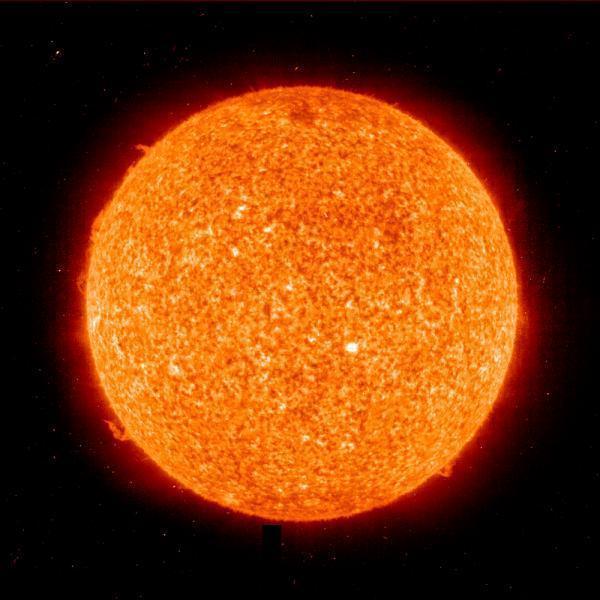
Science Daily reports from a Montana State University press release that an increasing number of solar scientists are puzzling over the fact that Solar Cycle 24 is still refusing to make an appearance, two years after Cycle 23 showed clear indications of leaving the stage:
The sun has been laying low for the past couple of years, producing no sunspots and giving a break to satellites.History shows a strong correlation between long intercycle calm periods and global cooling. The press release notes that a 50-year sunspot-free period occurred in the 17th century, during what is now known as the Little Ice Age.That's good news for people who scramble when space weather interferes with their technology, but it became a point of discussion for the scientists who attended an international solar conference at Montana State University. Approximately 100 scientists from Europe, Asia, Latin America, Africa and North America gathered June 1-6 to talk about "Solar Variability, Earth's Climate and the Space Environment."
The scientists said periods of inactivity are normal for the sun, but this period has gone on longer than usual.
"It continues to be dead," said Saku Tsuneta with the National Astronomical Observatory of Japan, program manager for the Hinode solar mission. "That's a small concern, a very small concern."
If this spot-free period persists, I suppose we'll know before too long whether or not the earth's climate truly responds to such changes in solar activity.
Monday, June 9, 2008
Seriously, who didn't see this coming?
It sure didn't take long.
The ink had hardly dried on Interior Secretary Kempthorne's directive designating the polar bear as "threatened" (based purely on hypotheticals and what-ifs, not on reality) when the environmental left showed why they pressed so hard for the designation. From a June 9 Associated Press story:
In this case, many in the environmental left are flat-out opposed to developing oil resources anywhere, and they have shown themselves to be masters at using regulation and litigation to head off new drilling in the United States. Arctic Alaska is by far the easiest target, because... well, polar bears are just so doggone cute!

In the current political climate (pardon the pun), what are the odds that this lawsuit will succeed? Never mind the fact that (as the article mentions) arctic exploration has led to zero deaths of polar bears and walruses in the fifteen years that "incidental harm" to these animals has been decriminalized within this context.
The ink had hardly dried on Interior Secretary Kempthorne's directive designating the polar bear as "threatened" (based purely on hypotheticals and what-ifs, not on reality) when the environmental left showed why they pressed so hard for the designation. From a June 9 Associated Press story:
Two conservation groups plan to sue to protect polar bears from petroleum exploration and drilling off Alaska's coast.Do I need to say it again? The AGW scare is merely a tool used by certain parties to advance portions of their agenda that might not otherwise be enacted.The Center for Biological Diversity and Pacific Environment gave the federal government formal notice Monday that they will sue under the Endangered Species Act to protect the bears, which were listed as threatened last month by Interior Secretary Dirk Kempthorne.
In this case, many in the environmental left are flat-out opposed to developing oil resources anywhere, and they have shown themselves to be masters at using regulation and litigation to head off new drilling in the United States. Arctic Alaska is by far the easiest target, because... well, polar bears are just so doggone cute!
In the current political climate (pardon the pun), what are the odds that this lawsuit will succeed? Never mind the fact that (as the article mentions) arctic exploration has led to zero deaths of polar bears and walruses in the fifteen years that "incidental harm" to these animals has been decriminalized within this context.
Wednesday, May 28, 2008
In case you haven't noticed...
 Where's Tim? Where's Tim? | As you can read in the sidebar, Real Life often takes me away from posting here. Recently, the aforementioned Real Life has forced me into a hiatus that is now in its sixth week. I'll be back soon, hopefully no later than the week after next. Thanks for your patience! |
Thursday, April 17, 2008
AGW will make hurricanes worse! No it won't! Yes it will! Maybe.
Al Gore used the Katrina disaster to popularize the notion that global warming would make such monsters a routine occurrence. That notion had no scientific merit, but no matter: Gore had successfully injected it into the public discourse, and it took on a life of its own (for example, it was cited by one insurance company as justification for a rate increase request in Florida).
Today Science Daily brings us another exercise in speculative alarmism related to hurricanes (emphasis added):
So, you're still not impressed with the 25-mile shift? Well, the author of the press release doesn't want us to rest easy:
Today Science Daily brings us another exercise in speculative alarmism related to hurricanes (emphasis added):
The Earth's jet streams, the high-altitude bands of fast winds that strongly influence the paths of storms and other weather systems, are shifting--possibly in response to global warming. Scientists at the Carnegie Institution determined that over a 23-year span from 1979 to 2001 the jet streams in both hemispheres have risen in altitude and shifted toward the poles. The jet stream in the northern hemisphere has also weakened. These changes fit the predictions of global warming models and have implications for the frequency and intensity of future storms, including hurricanes.So, how far has the average position of the jet stream shifted over that 23 year span? About 25 miles. That's nothing -- we're talking about the distance from one side of a large metropolitan area to the other -- but the researchers (and/or whoever wrote the press release) do their best to make it sound frightening.
Cristina Archer and Ken Caldeira of the Carnegie Institution's Department of Global Ecology tracked changes in the average position and strength of jet streams using records compiled by the European Centre for Medium-Range Weather Forecasts, the National Centers for Environmental Protection, and the National Center for Atmospheric Research. The data included outputs from weather prediction models, conventional observations from weather balloons and surface instruments, and remote observations from satellites.
Storm paths in North America are likely to shift northward as a result of the jet stream changes. Hurricanes, whose development tends to be inhibited by jet streams, may become more powerful and more frequent as the jet streams move away from the sub-tropical zones where hurricanes are born.Here's the equation: Small shift poleward in the average position of the jet stream = more powerful and more frequent hurricanes. Al Gore, call your movie agent.
So, you're still not impressed with the 25-mile shift? Well, the author of the press release doesn't want us to rest easy:
The poleward shift in their average location discovered by the researchers is small, about 19 kilometers (12 miles) per decade in the northern hemisphere, but if the trend continues the impact could be significant. "The jet streams are the driving factor for weather in half of the globe," says Archer. "So, as you can imagine, changes in the jets have the potential to affect large populations and major climate systems."Some questions for our researchers:
- Will the trend continue? How do you know?
- What was the trend before 1979?
- How long is the current trend likely to continue?
- How far poleward is the jet likely to go?
- Are there any natural mechanisms that will limit or halt the poleward march?
"At this point we can't say for sure that this is the result of global warming, but I think it is," says Caldeira. "I would bet that the trend in the jet streams' positions will continue. It is something I'd put my money on."Whatever you may think about this speculation, let's be clear: it's speculation, not science. The study was about the shift in the jet stream, not about the mechanisms of hurricane development. Of course, that doesn't matter. Some scientists said it, and it fits the AGW template, so it will be reported.
Friday, April 11, 2008
Updates on the remarkable winter of 2007-8
Yes, yes, I know. Climate is long-term, and one cold winter does not a trend make. Still, even CoGW adherents ought to take note of the mounting evidence that this winter season is unlike any we've seen since.... since when?
Since this winter has been undeniably extraordinary, those who have much invested in the AGW paradigm have been forced into "Yeah, but" mode: "Yeah, you've never seen this kind of winter in your lifetime, but it's all because of La Niña. Even though we attributed the extraordinarily warm temperatures of El Niño year 1998 to AGW, the extraordinarily cold temperatures of La Niña year 2008 are a routine fluctuation. We expect the doomsday countdown to resume shortly."
Even as Solar Cycle 24 stubbornly refuses to establish itself (despite months of numerous premature announcements that it had started), our planet's northern hemisphere winter has thus far declined to respect the calendar, as is evidenced by the unusually heavy April snowstorm currently working its way across the northern plains of the U.S. and Canada.
How unusual is this winter in the U.S.? Here are just a couple of examples from the past week:
Minneapolis Star-Tribune, April 11:
But never mind all that. Once La Niña subsides, we can get back to TEOTWAWKI.
Since this winter has been undeniably extraordinary, those who have much invested in the AGW paradigm have been forced into "Yeah, but" mode: "Yeah, you've never seen this kind of winter in your lifetime, but it's all because of La Niña. Even though we attributed the extraordinarily warm temperatures of El Niño year 1998 to AGW, the extraordinarily cold temperatures of La Niña year 2008 are a routine fluctuation. We expect the doomsday countdown to resume shortly."
Even as Solar Cycle 24 stubbornly refuses to establish itself (despite months of numerous premature announcements that it had started), our planet's northern hemisphere winter has thus far declined to respect the calendar, as is evidenced by the unusually heavy April snowstorm currently working its way across the northern plains of the U.S. and Canada.
How unusual is this winter in the U.S.? Here are just a couple of examples from the past week:
Minneapolis Star-Tribune, April 11:
Boston Globe, April 8:The latest-ever start to the Mississippi River navigation season in Minnesota is unfolding today.
[...] The average opening date of the navigation season for the past 30 years has been March 20. In 2007, the first tow to make it to St. Paul arrived on March 29.
This year's late start, due to unusually cold spring weather, breaks the previous late record of April 7, set in 1978.
Some Maine syrup producers say the season is off to a late start with delays caused by cold weather and taps and tubing hidden by snow in northern Maine.On the other side of the world, southern China got its worst winter in 50 years. At the bottom of the world, the media shrieks whenever a piece of ice breaks off of an ice shelf, but we get nothing about the fact that overall, Antarctica has been cooling in recent decades. In fact, the just-completed antarctic summer has yielded still more extraordinary news: Surface snowmelt there is running about 40% below the average of the previous 20 years.Bob Moore of Bob's Sugar House is busy boiling sap this week, but he'd be a lot busier if he could tap all of his trees. He said at least 75 percent of his 5,000 trees are unreachable.
"I have trees that still have 3 feet of snow around them," he said. "It's not looking good right now."
Maine's maple syrup production can start anytime between mid-February and late March. But like most agriculture ventures, the season is subject to the whims of the weather.
"As usual, for some folks, especially in the far south of the state, sugaring season is over," said Kathy Hopkins, a maple expert with the University of Maine Cooperative Extension in Skowhegan.
"But I doubt they'll be done tapping in The County until June," she said in joking reference to the state's northernmost county, Aroostook. "In some places, they just can't get to their trees and all their tubing is buried under snow."
But never mind all that. Once La Niña subsides, we can get back to TEOTWAWKI.
Subscribe to:
Posts (Atom)



 Headlines via e-mail


